
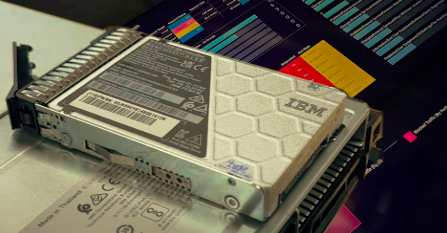
IBM LTO 7 Tape Drive – TS4300 Review & Insights! | 00GH722
The IBM LTO-7 Tape Drive for TS4300 (Part No. 00GH722) is a specialized enterprise backup component designed for organizations that prioritize long-term data retention, security, and cost-efficient archival. Built to integrate seamlessly with the IBM TS4300 Tape Library and developed by IBM, this drive represents a mature generation of Linear Tape-Open (LTO) technology that still plays a critical role in modern data protection strategies.
Featured Product (Typical TS4300 LTO-7 Drive Module)
Overview of IBM LTO-7 Technology
LTO-7 (Linear Tape-Open generation 7) is part of a widely adopted tape storage standard known for its durability and scalability. The IBM implementation—often seen in models like TS2270 or TS4300-compatible drives—delivers high capacity, strong data integrity, and efficient throughput, making it ideal for backup and archival use cases.
An LTO-7 drive typically supports:
- Up to 6 TB native capacity per cartridge (15 TB compressed) (IBM Power 11)
- Transfer speeds of up to 300 MB/s (IBM)
- Backward compatibility (write to LTO-6, read LTO-5/6/7)
These capabilities make LTO-7 an excellent balance between performance and cost, especially for enterprises not yet requiring newer (and more expensive) LTO-8 or LTO-9 systems.
TS4300 Integration: Modular Power
The real strength of the 00GH722 drive comes from its integration with the IBM TS4300 tape library. The TS4300 is a modular, scalable platform that allows organizations to grow their storage infrastructure incrementally.
Key TS4300 benefits:
- Modular scalability: Expand up to 16 modules and hundreds of cartridges (IBM)
- Multi-drive support: Mix half-height and full-height drives
- Automation: Robotic cartridge handling for efficient operations
- Massive capacity: Petabyte-scale archival potential
This means the LTO-7 drive is not a standalone solution—it’s part of a larger automated ecosystem designed for enterprise data centers.
Performance and Throughput
Performance is a major selling point of the IBM LTO-7 drive. Compared to earlier generations, it offers:
- Faster data ingestion for large backup jobs
- Reduced backup windows
- Efficient streaming for sequential workloads
Because tape is inherently sequential, it excels at:
- Full system backups
- Long-term archival
- Compliance storage
However, it is less suited for random-access workloads compared to disk or SSD systems.
Security and Data Protection
One of the strongest arguments for tape—especially in the age of ransomware—is air-gapped security.
The IBM LTO-7 drive supports:
- Hardware encryption for secure data storage
- WORM (Write Once, Read Many) media for compliance
- Physical isolation (offline storage)
The TS4300 library enhances this further by enabling air-gapped architectures that are “essentially impossible for hackers to corrupt” when offline (IBM).
This makes the solution highly attractive for:
- Financial institutions
- Healthcare organizations
- Government agencies
Cost Efficiency and ROI
Tape storage remains one of the lowest-cost storage mediums per terabyte. The LTO-7 drive contributes to cost savings through:
- Lower energy consumption than spinning disks
- Long media lifespan (often 20–30 years)
- Reduced cooling requirements
Organizations with large datasets benefit from:
- Lower total cost of ownership (TCO)
- Reduced cloud storage expenses for cold data
Even though newer LTO generations exist, LTO-7 still offers a compelling price-to-performance ratio.
Real-World Use Cases
The IBM LTO-7 TS4300 setup is commonly used for:
1. Enterprise Backup
Daily or weekly backups of servers, databases, and virtual machines.
2. Archival Storage
Long-term retention of historical data, logs, or compliance records.
3. Disaster Recovery
Offsite tape storage ensures recovery in case of cyberattacks or system failure.
4. Media & Entertainment
Studios use tape for archiving raw footage and completed projects.
Limitations and Considerations
While powerful, the LTO-7 drive is not without drawbacks:
1. Sequential Access
Tape is slower for random data retrieval compared to disk or SSD.
2. Initial Setup Complexity
Tape libraries require:
- Proper configuration
- Backup software integration
- Operator training
3. Physical Handling
Cartridges must be managed, stored, and transported properly.
4. Aging Technology
LTO-7 is no longer the latest generation, with LTO-8/9 offering higher capacities.
However, for many organizations, these limitations are outweighed by cost and reliability benefits.
Comparison Table: LTO-7 Drive Options
| Attribute | IBM LTO7 HH FC Tape Drive Module | IBM 3573-8447 LTO-7 SAS Drive | IBM 38L7456 LTO-7 SAS HH Drive | Qualstar Q-Ser IBM LTO-7 SAS Drive |
|---|---|---|---|---|
| Interface | Fibre Channel (8Gb) | SAS | SAS | SAS |
| Form Factor | Half-height (HH) | Half-height | Half-height | Half-height |
| Native Capacity | 6 TB | 6 TB | 6 TB | 6 TB |
| Compressed Capacity | 15 TB | 15 TB | 15 TB | 15 TB |
| Best Use | TS4300 integration | Standalone/library | Enterprise backup | Third-party systems |
| Price Range | Higher | Mid | Mid | Higher |
Strengths at a Glance
- Proven enterprise-grade reliability
- Excellent cost per TB
- Strong security with encryption + air-gap
- Seamless integration with TS4300
- Scalable architecture for growing data needs
Final Verdict
The IBM LTO-7 Tape Drive (00GH722) for TS4300 remains a highly relevant solution in enterprise storage, especially for organizations focused on long-term retention, compliance, and cyber resilience. While newer tape generations offer greater capacity, LTO-7 continues to deliver a strong balance of performance, affordability, and reliability.
If your organization needs:
- Affordable large-scale backup
- Secure offline storage
- Scalable archival infrastructure
Then this drive—within a TS4300 ecosystem—is still a smart and practical investment.