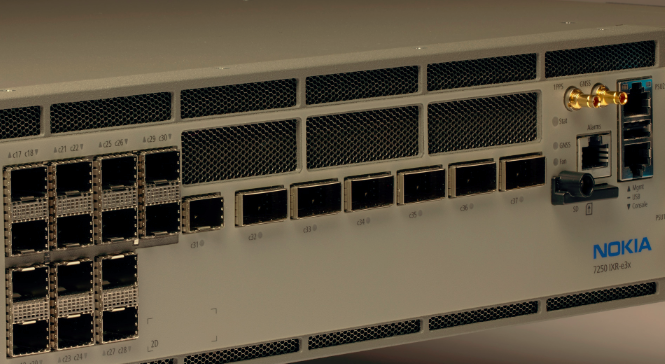
Nokia ESWL-DFC12 Spare Module
Nokia ESWL-DFC12 Spare Module: Keeping Your Optical Network Bright
A dependable spare transponder that keeps high-capacity optical links running smoothly — because network downtime should never be part of the plan.
Every optical network is only as reliable as the spares behind it. The Nokia ESWL-DFC12 spare module (part number 3KC70959AAAA) is a replacement unit for the DFC12 family of high-capacity coherent transponders used across Nokia’s 1830 optical transport platforms — the same photonic backbone that carries metro, long-haul, and data center interconnect traffic for carriers and enterprises worldwide.
Whether you’re building out spares inventory for a live network, planning a maintenance window, or replacing an aging line card before it becomes an emergency, this post walks through what the DFC12 module does, what its specs look like, and how to get a quote when you’re ready to order. Let’s dig in!
Why This Module Matters
DFC12-class modules are 1.2 Terabit-class coherent optical transponders — the workhorses that convert massive volumes of data into optical signals capable of traveling long distances across fiber. They’re deployed in Nokia’s 1830 PSS and 1830 PSI-M optical platforms, which are widely used in carrier backbone networks, metro rings, and increasingly in disaggregated, open-line-system architectures.
Keeping a certified spare on the shelf (or in a regional depot) means that when a card fails or a network needs to scale quickly, your team isn’t stuck waiting on a long lead time. That’s the whole point of a “SPARE” designation — it’s built and tested to slot in fast, minimizing the risk of a prolonged outage on a critical optical path.
Transponder Class
1.2 Terabit-class coherent optical module, DFC12 family.
Platform Compatibility
Designed for Nokia 1830 PSS and 1830 PSI-M optical transport platforms.
Part Type
Spare / replacement unit — ready to swap into an existing deployment.
Use Case
Field maintenance, spares inventory, and rapid fault recovery.
Network Role
Metro, long-haul, and data center interconnect optical transport.
Architecture Fit
Supports disaggregated, open-line-system optical network designs.
Data Sheet
| Spec | Detail |
|---|---|
| Part Number | 3KC70959AAAA |
| Designation | ESWL-DFC12 (Spare) |
| Module Family | DFC12 — 1.2T Coherent Transponder |
| Compatible Platforms | Nokia 1830 PSS, 1830 PSI-M |
| Order Type | Spare / Replacement Unit |
| Typical Deployment | Metro & long-haul optical transport, DCI links |
| Network Architecture | Supports disaggregated / open ROADM networks |
| Recommended For | Carrier backbone teams, MSOs, large enterprise fiber networks |
Note: Detailed line-rate, wavelength, and interface specs vary by firmware/configuration — confirm exact technical specifications with Nokia documentation or your account team before deployment planning.
How Spares Strategy Pays Off
Optical hardware failures are rare, but when they happen on a live backbone link, every minute of downtime carries real cost — dropped traffic, SLA penalties, and frustrated end customers. Here’s a friendly look at how spares planning typically breaks down across network operations teams.
- Carrier Backbone — 38%
- Metro / Regional Rings — 27%
- Data Center Interconnect — 20%
- Enterprise Fiber Networks — 15%
Approximate distribution of common deployment scenarios for DFC12-class transponder modules.
Popular Use Cases
The Case for Keeping Certified Spares On Hand
Optical transport hardware doesn’t fail often — but when a transponder does go down on a live backbone or metro ring, the ripple effects can be significant. Rerouting traffic, opening emergency vendor tickets, and waiting on next-day-or-later shipping all add up to costly downtime that’s entirely avoidable with a proper spares strategy.
That’s exactly the role a module like the ESWL-DFC12 plays. Instead of scrambling when a card degrades or fails, network operations teams can pull a certified spare from their own inventory or regional depot and get the link back to full capacity in a fraction of the time. For carriers and large enterprises running mission-critical fiber, that kind of preparedness isn’t optional — it’s table stakes.
It’s also worth thinking about spares planning holistically. As networks shift toward disaggregated, open-line-system architectures, having compatible transponders on hand across your PSS and PSI-M nodes gives your team flexibility to respond to both hardware failures and unexpected capacity demands — without waiting on a full procurement cycle every time.
Ready to Secure Your Spare?
Because this is a specialized spare part, pricing and availability depend on your specific configuration, quantity, and whether you need new, refurbished, or tested-pull inventory. Our team can help track down the right unit and get you a real quote.
Request a Quote 🎈
Tell us a bit about your network and inventory needs, and we’ll put together pricing and availability for the Nokia ESWL-DFC12 (3KC70959AAAA) or compatible alternatives.
When you email us, please include:
- ✅ Quantity needed
- ✅ Preferred condition (new / refurbished / tested-pull)
- ✅ Platform in use (1830 PSS, 1830 PSI-M, etc.)
- ✅ Preferred delivery timeline
- ✅ Company name and best contact number
Prefer to write it yourself? Reach us directly at [email protected]